


Writing Across the Disciplines
On Friday, January 20th I’ll be giving a keynote address on the topic “Writing Across the Disciplines: English Variation in the Classroom” and leading two breakout sessions at the Writing in the Disciplines/Across Communities conference held at CCBC-Catonsville. The theme of this year’s conference is “Writing in a Globalized World.”
My entry “Sociolinguistics” has just been published in the new Oxford Bibliographies Online: Linguistics, edited by Mark Aronoff. Each dynamic bibliography contains “a hierarchical body of interwoven entries designed to help students and scholars move through the most important scholarship, commentary, and resources in a specific area of research.” My entry on Sociolinguistics includes bibliographic information and short summaries of over 125 key articles, books, and reference materials in the field, organized according to themes that include Language and Cognition, Languages and Language Varieties in Contact, Language Variation and Social Identities, and Applied Sociolinguistics. To subscribe to OBO to access the bibliography, click here.
Presenting at the New Ways of Analyzing Variation 40 Conference
Anne and Christine are presenting on October 29, 2011 at the New Ways of Analyzing Variation 40 Conference at Georgetown University in a panel entitled, “Sociolinguistics in the Schools: The Next 40 Years of Service in Return.” Co-panelists include Mary Bucholtz and Julie Sweetland. You can download our panel abstracts here.
UMBC Magazine story on Baltimore Language Podcasts
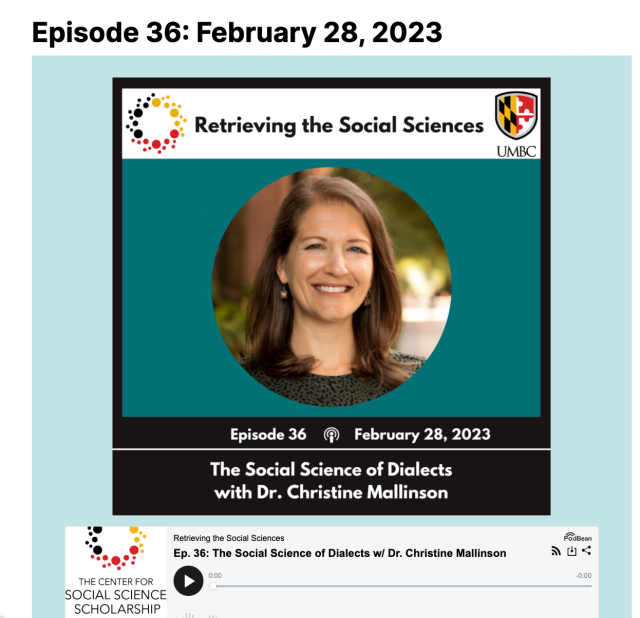
This story in the Fall 2011 issue of the UMBC Magazine talks about the podcasts on Baltimore language and culture produced by students in my Spring 2011 seminar, “Language in Diverse Schools and Communities,” including the podcast that Anne Charity Hudley, Laura Strickling, and I co-created on language variation in the classroom, featuring the perspectives and insights of 14 Maryland and Virginia K-12 educators.
Review of Our Book in Choice: Current Reviews for Academic Libraries
Our book, Understanding English Language Variation in U.S. Schools, has just been reviewed in Choice: Current Reviews for Academic Libraries. Here is an excerpt from our review: “The result is an academic study relevant to anyone interested in the way children (and adults) process language, as well as to classroom teachers looking for educational strategies to better serve their students. Summing Up: Recommended. All readership levels.”
Interview about the Word “Rape” in Sports Metaphor
In this interview in the Savage-Guilford Patch I talk about the use of the word “rape” in sports metaphors. On the one hand, language is always changing, and taking a word with a literal meaning and using it in a figurative sense is a common linguistic process. On the other hand, as I say in the article, “There is a lot of linguistic evidence to suggest that the way we talk about social situations can reflect how we think about them. A victim of rape, for example, might justifiably believe that this type of sports metaphor not only celebrates athletic prowess but also glorifies the act of rape itself.” Check out the article and comments here.
New Grant from the National Science Foundation
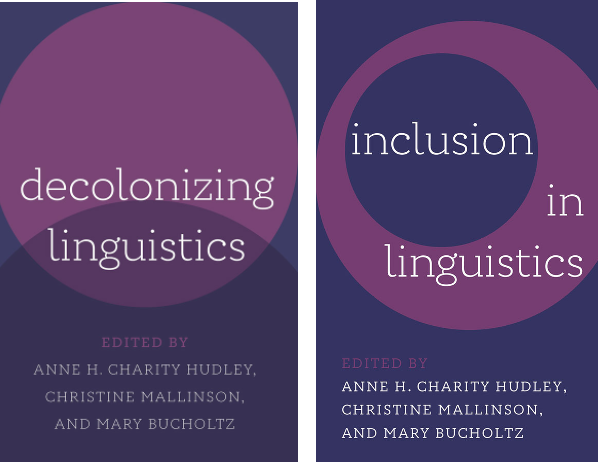
I am pleased to announce that Anne Charity Hudley and I have received a grant from the National Science Foundation to study the ways in which language plays a role in the educational challenges that often affect culturally and linguistically diverse students in STEM classrooms. Our goal is to work with teachers to figure out what challenges are being faced in terms of language for their math and science students and what resources teachers and students need to be able to face those challenges. During the three-year grant, “Assessing the Results of Sociolinguistic Engagement with K-12 STEM Education in Maryland and Virginia Public and Independent Schools,” we will work with K-12 STEM educators in the Baltimore and Richmond areas to collect data on how these educators learn from professional development workshops on language variation and integrate pedagogy and assessment techniques into their classroom. Our research also provides immediate practical application to educators’ pedagogy and practice in the form of educator workshops, teacher designed readings, and a website for educators that ensures that the research outcomes of our project are broadly disseminated. Click here to read the official UMBC press release!
Radio Interview on WAMU about Eastern Shore Accents
I was interviewed on WAMU 88.5 American University Radio today about the accent found on Tangier Island, Virginia. The Tidewater Accent found there is characteristic of the eastern shores of Maryland and Virginia and of the Outer Banks of North Carolina. Listen to the interview here: “Tangier Islanders Retain Unique Dialect”
The 2011 “Teaching American Speech” Section
The Summer 2011 “Teaching American Speech” section of the journal American Speech (86.2) is now available! This summer’s section includes the following:
Lauren Squires and Robin Queen, “Media Clips Collection: Creation and Application for the Linguistics Classroom,” pp. 220-234
Benjamin Torbert, “Using Literature in the Linguistics Classroom,” pp. 234-246
Beth Rapp Young, “The Grammar Voyeur: Using Google to Teach English Grammar to Advanced Undergraduates,” pp. 247-258
Phillip M. Carter, “A Treatise on ‘Multiculturalism’ and Education,” pp. 259-263. A review of: Language Diversity in the Classroom, by John Edwards (Multilingual Matters, 2010).
Lauren Hall-Lew, “Norsemen, Normans, and Now: A Book for Today’s English Language History Student,” pp. 264-268. A review of: The English Language: A Historical Introduction, by Charles Barber, Joan C. Beal, and Philip A. Shaw (Cambridge, 2009)
Congratulations!
Article Available on LinguistList with Discussion Forum
LINGUIST List users now have free access to read selected Language and Linguistics Compass review articles and discuss them in an online forum. Check out Dr. Anne H. Charity Hudley’s and my article, “Communicating about Communication: Multidisciplinary Approaches to Educating Educators”!


